Powerball vs Mega Millions on October 12-13, 2026: $538M and $385M jackpots. Compare odds, ticket price, taxes and the risk of sharing a win.
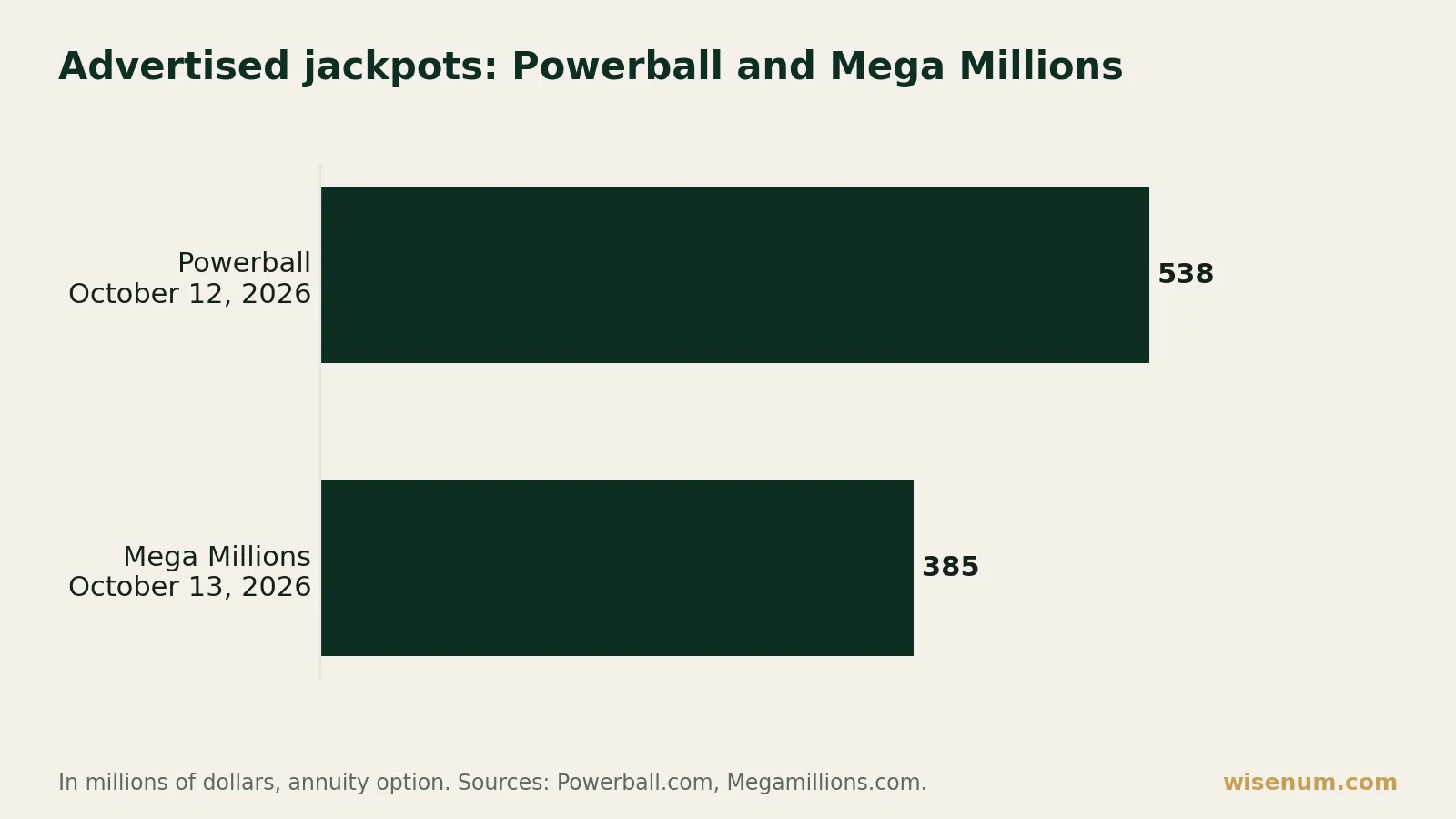
The biggest jackpot is not the easiest one to win. According to the North Carolina Education Lottery, Powerball (about $538M for the October 12, 2026 draw) and Mega Millions (about $385M for the October 13 draw) together top $900M. This Powerball vs Mega Millions comparison puts the numbers side by side: the two games are almost level on jackpot odds (a 0.6% gap), but the ticket price and the risk of sharing differ.
This article compares figures. It does not recommend either game: nobody knows in advance which numbers will come up, and every combination has the same probability.
The jackpots in numbers: Powerball $538M and Mega Millions $385M
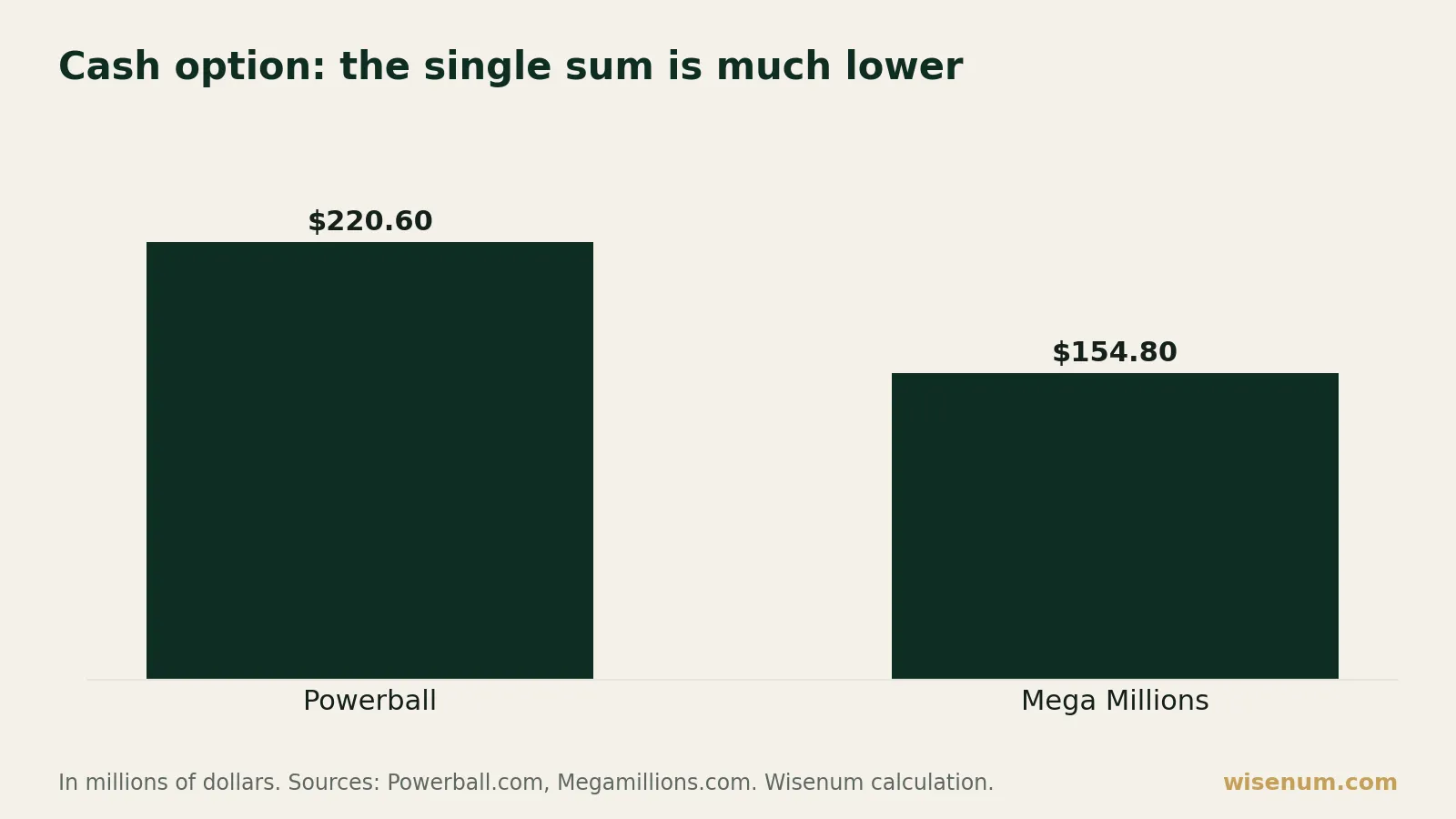
The advertised amounts are the "annuity" option, paid out over several years. The "cash" option is a single lump sum, and it is much lower.
- Powerball, October 12, 2026 draw: $538M annuity, $220.6M cash (powerball.com).
- Mega Millions, October 13, 2026 draw: $385M annuity, $154.8M cash (megamillions.com).
The total: 538 + 385 = $923M, which confirms the "over $900M" from the North Carolina lottery. In cash, the sum drops to 220.6 + 154.8 = $375.4M.
The cash option is about 41% of the annuity for Powerball (220.6 ÷ 538) and about 40% for Mega Millions (154.8 ÷ 385). These are estimated amounts, announced as of October 12, 2026, and they can move before the draw.
Jackpot odds: a 0.6% gap
Both probabilities come from the official sites (Powerball, Mega Millions):
- Powerball: 1 in 292,201,338;
- Mega Millions: 1 in 290,472,336.
The gap: 292,201,338 − 290,472,336 = 1,729,002, and 1,729,002 ÷ 290,472,336 ≈ 0.6%. A Powerball line therefore has a jackpot probability about 0.6% lower than a Mega Millions line. On the jackpot, the two games are almost level.
The ticket price changes the picture more than the probability does:
- Powerball: $2 per line;
- Mega Millions: $5 per line.
With $10, you can play 5 Powerball lines or 2 Mega Millions lines. The price does not change the probability of a single line, only how many lines a budget buys. Our page on Powerball odds and prize tiers details every tier, and the Mega Millions page does the same for the other game. For the story of Mega Millions' latest change, see Mega Millions jackpot probability: what really changed in 2025.
Federal tax withholding: what you would actually receive
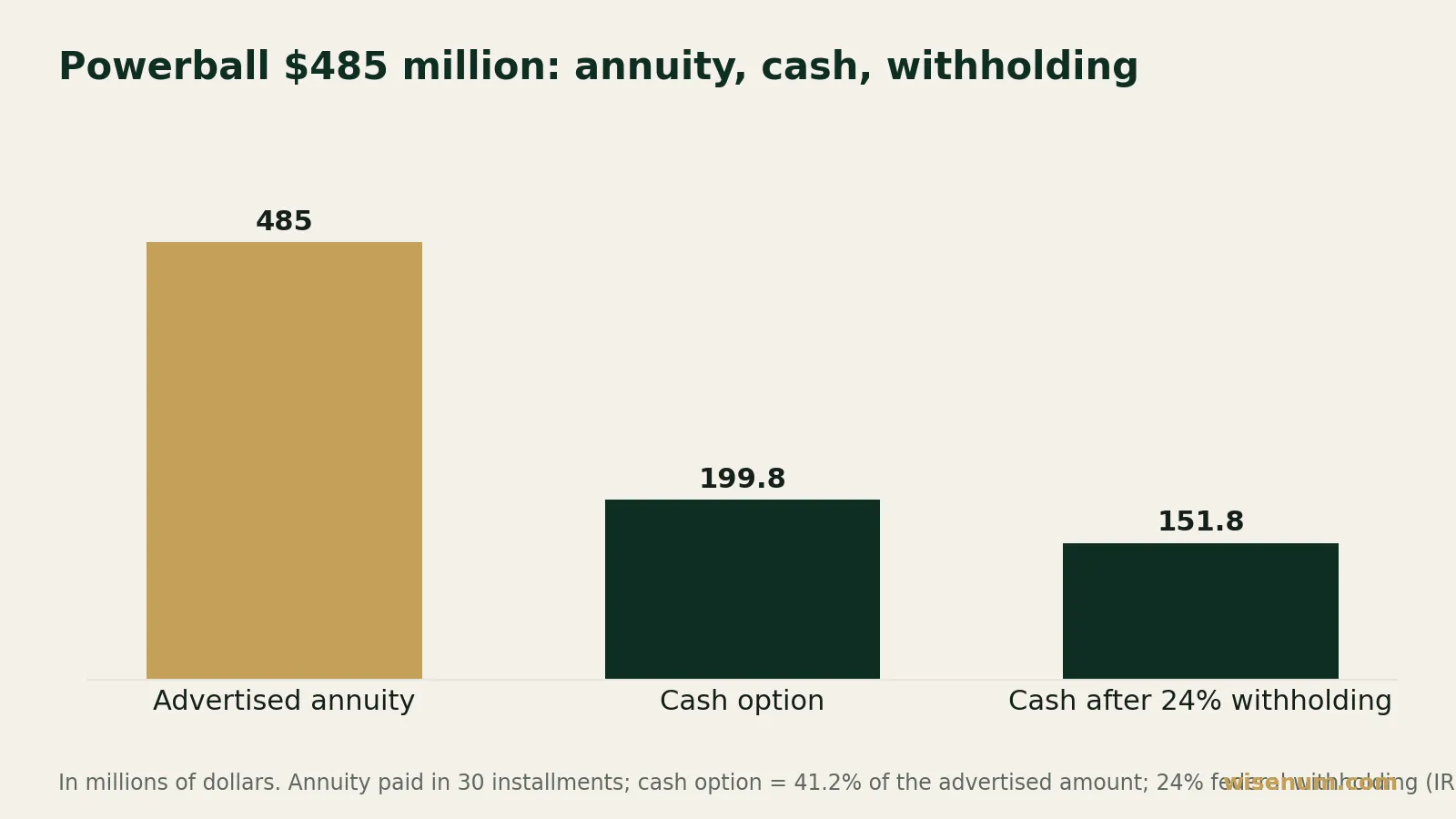
An advertised jackpot is not the amount you receive. According to the IRS instructions for Form W-2G, the US tax authority withholds 24% of lottery winnings above $5,000. The marginal federal tax rate can then climb as high as 37% on a very large prize, depending on the winner's overall situation.
A rough order of magnitude, applied to the cash option and leaving out state taxes:
- Powerball: $220.6M × 24% = $52.9M withheld, leaving about $167.7M. At a 37% rate, the bill rises to $81.6M (220.6 × 0.37).
- Mega Millions: $154.8M × 24% = $37.2M withheld, leaving about $117.6M. At a 37% rate, it rises to $57.3M (154.8 × 0.37).
These figures are an illustration, not a tax calculation: the real amount depends on the winner's situation, the state where the ticket was bought, and the rules of the country of residence. The main point is that withholding applies to both games in the same way: it shrinks each jackpot in the same proportions and does not separate the two games. For the details of another Powerball jackpot, see Powerball $485 Million Jackpot: What It's Really Worth.
Why big jackpots are shared more often
The bigger the jackpot, the more players it attracts. Our article on why big jackpots are shared more often details what the data shows. Here is the basic arithmetic, with a hypothetical worked example:
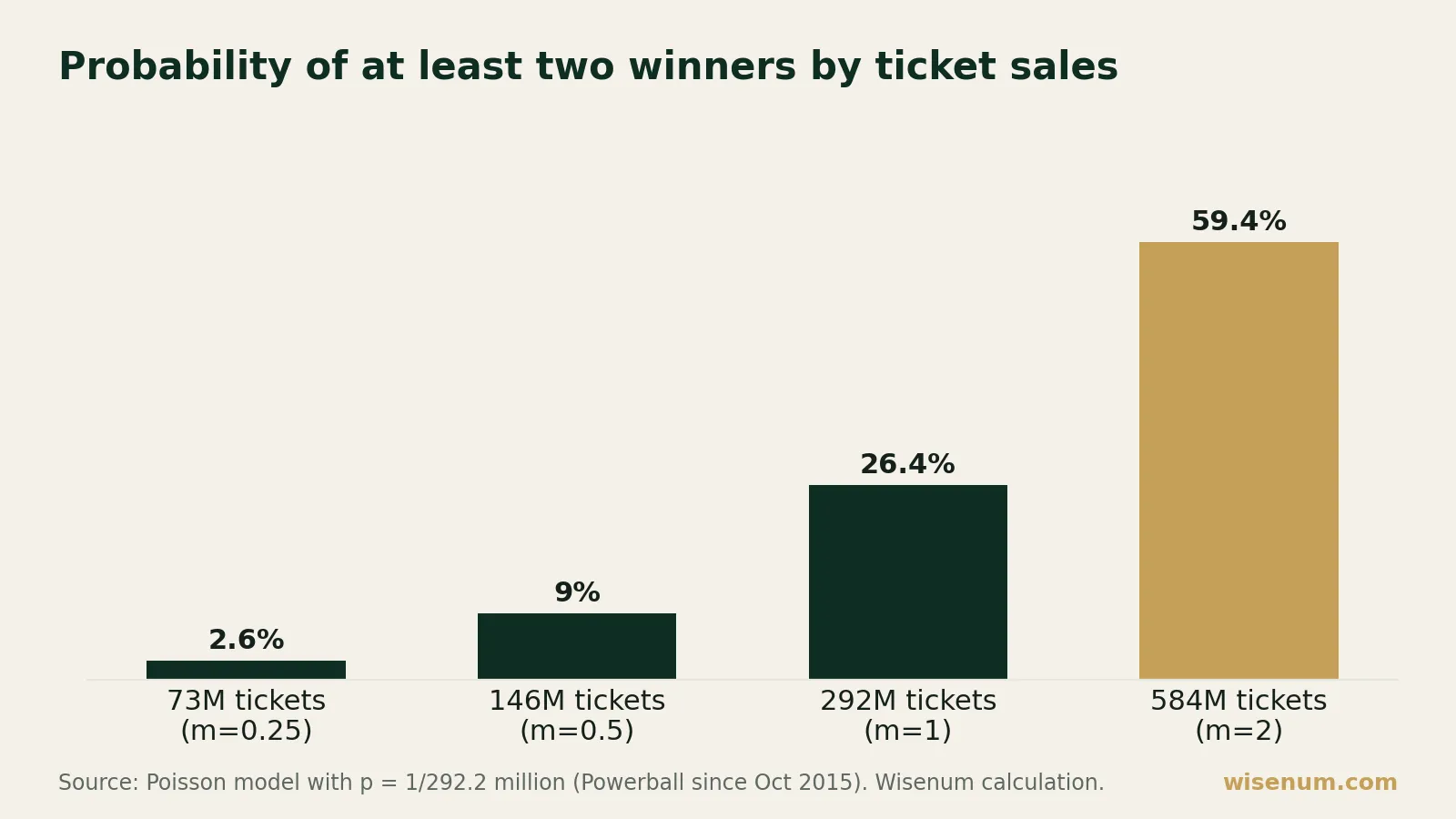
- Imagine 300 million Powerball lines, all chosen at random and independently. The average number of winning lines would be 300,000,000 ÷ 292,201,338 ≈ 1.03.
- With 600 million lines, the average would rise to about 2.05.
This example is a model, not a sales figure: none of our sources gives the number of tickets sold for these draws. It illustrates one idea: when sales rise, the probability that a winning line is shared rises too, while each line's probability of winning does not move.
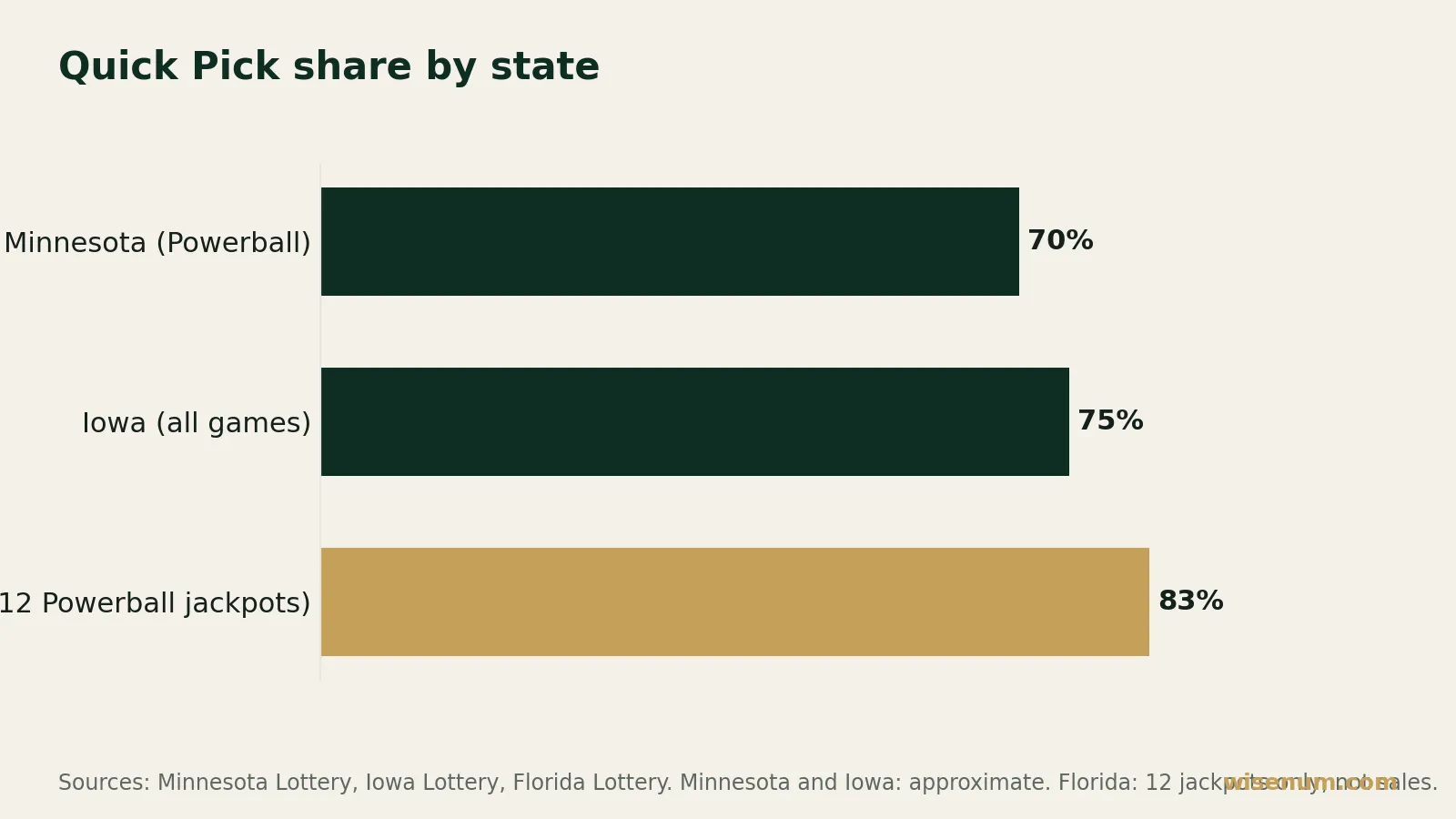
In reality, players do not pick at random. Birthdays concentrate choices on the numbers 1 to 31, and some lines are played by far more people than others. Our article on lottery number patterns and shared jackpots shows this.
The $538M jackpot is therefore no easier to win than the $385M one, and it is more likely to be shared, especially if the winner played a line that many other players also picked.
Access from Europe: what we know
We have no source on Powerball or Mega Millions being sold from France or Spain, and this article claims nothing on the subject: check with an operator authorized in your country.
One fact is sourced: Powerball has been sold in the United Kingdom through the National Lottery, run by Allwyn, since July 21, 2026. The ticket costs £4 and the starting jackpot is £12M. These figures are not those of the US draw described above ($2 per line, $538M): check the rules and amounts on the operator's site before making any comparison.
The takeaway
- The two advertised jackpots total $923M ($538M for Powerball on October 12, 2026, $385M for Mega Millions on October 13), or $375.4M in cash.
- The biggest jackpot is not the easiest to win: 1 in 292,201,338 for Powerball against 1 in 290,472,336 for Mega Millions, a gap of about 0.6%.
- The ticket price ($2 or $5) changes how many lines a budget buys, not the probability of each line.
- The bigger the jackpot, the more lines are played, so the higher the risk of sharing a win. Every combination has the same probability: the only real lever is the risk of sharing a win.
Playing the next draw? See whether your line looks like the most common picks: Analyze a line
Play for fun, and only spend what you can afford to lose. Responsible gambling support: in the US, call 1-800-GAMBLER (ncpgambling.org); in the UK, visit BeGambleAware.
Frequently asked questions
Are the jackpot odds different for Powerball and Mega Millions?
Only slightly: 1 in 292,201,338 for Powerball against 1 in 290,472,336 for Mega Millions, a gap of about 0.6%. On the jackpot, the two games are almost level.
Is a $538M jackpot easier to win than a $385M jackpot?
No. The probability of a line does not depend on the size of the jackpot. A bigger jackpot does attract more lines, though, so the risk of sharing a win rises. The ticket price ($2 for Powerball, $5 for Mega Millions) changes how many lines a budget buys, not the probability of each one.
How much does a Powerball or Mega Millions winner actually receive?
The advertised amounts ($538M and $385M) are estimates for the annuity option, paid over several years. In cash, the sum is lower: $220.6M for Powerball and $154.8M for Mega Millions. Federal withholding comes on top: 24% according to the IRS instructions, with the marginal rate reaching up to 37% depending on the winner's situation, not counting state taxes.
Does every combination have the same probability in Powerball and Mega Millions?
Yes, every combination has the same probability. Some lines, such as those built on birthdays, are played by far more people, though: if one of them wins, the prize is more likely to be shared.
Where can I play Powerball or Mega Millions from Europe?
This article claims nothing about sales from France or Spain: check with an operator authorized in your country. Powerball has been sold in the United Kingdom through the National Lottery (run by Allwyn) since July 21, 2026, but with rules and amounts different from the US game.
Every valid combination has the same probability of being drawn. Wisenum does not predict winning numbers.