A 2026 study finds popular lottery combinations lower the expected payout in pari-mutuel games, because the prize is split among more winners.
Do popular lottery combinations pay less when they win? Yes: in a pari-mutuel lottery, a heavily played combination lowers the expected payout, because the prize is split among more winners. A 2026 study by Parker, Albuquerque and Bart, published in the Journal of Marketing, observes this in California Lottery data. Popularity affects how the prize is shared, never the probability of being drawn: every combination has exactly the same probability.
The study: California and the pari-mutuel system
The authors are Paul Parker, Paulo Albuquerque and Yakov Bart. Their paper, "Not Just Bad Luck: Income-Based Gaps in Lottery Losses", was published online on March 16, 2026 in the Journal of Marketing (volume 90).
They worked with market data and transaction-level data from the California Lottery. That lottery runs on a pari-mutuel system: payouts depend on the number of winners, because each prize is split among them. The California Lottery publishes these pari-mutuel payouts at every Mega Millions draw, and they differ from the fixed amounts shown elsewhere.
The starting point is well known: lower-income players spend a larger share of their income on lottery tickets. The study looks for what lies behind their losses.
How popularity lowers the expected payout
The mechanism fits in one sentence: the popularity of a combination affects how the prize is shared, never its probability of being drawn.
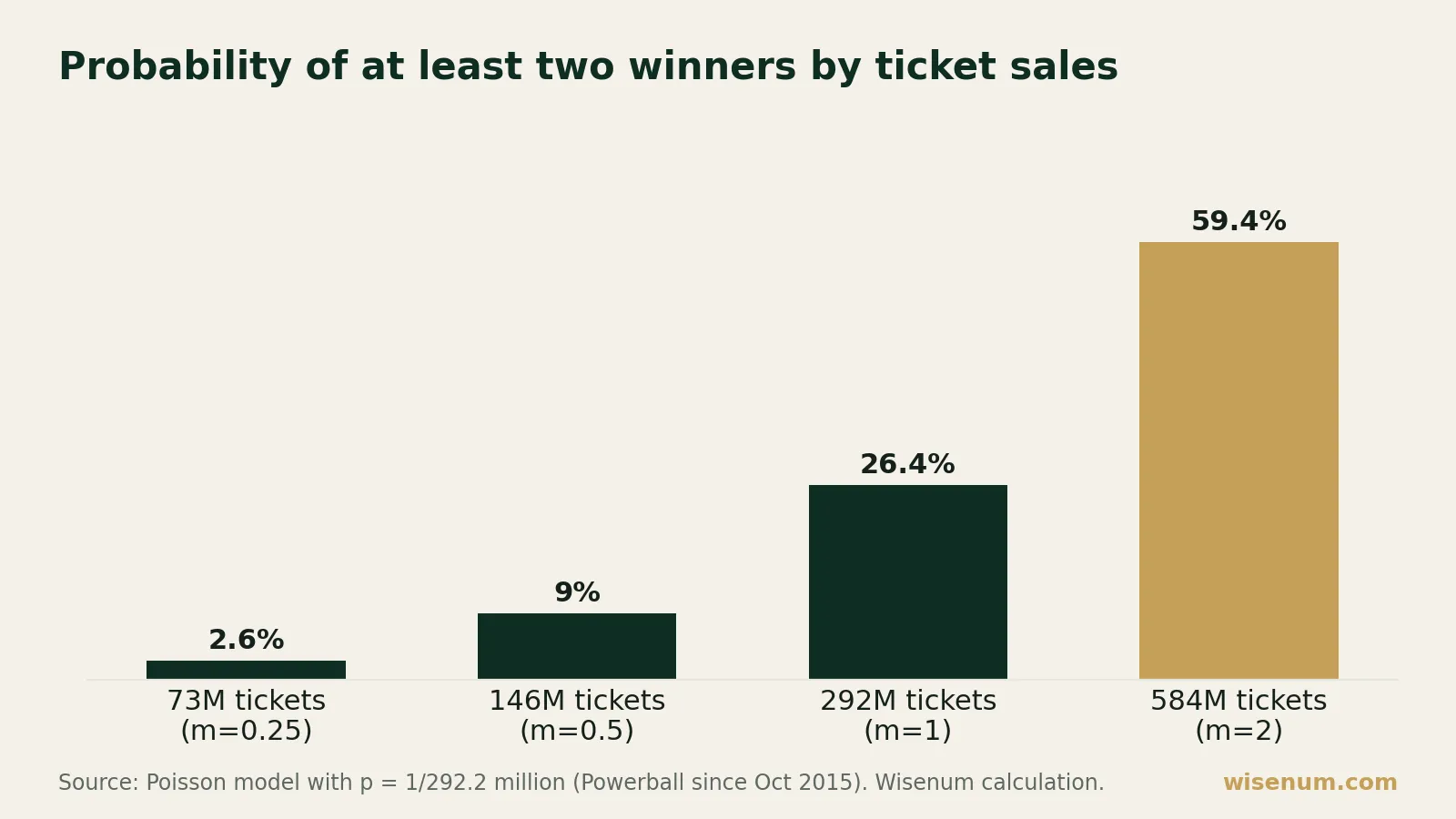
Here is a worked example, purely for illustration. A $1,000,000 prize won by a single line goes entirely to that player. If the same line was played by four people, each receives $1,000,000 ÷ 4 = $250,000. The combination came up with the same probability in both cases. Only the number of people sharing the prize changed.
As a reminder, the probability of winning the Powerball jackpot is 1 in 292.2 million, and for Mega Millions it is 1 in 290,472,336. These probabilities do not depend on the combination you choose.
What the study finds: about 7% more lost per ticket
According to the authors, lower-income players lose more per ticket for two related reasons. They use random generators less often, and they "favor popular number combinations". Combined with the pari-mutuel system, these behaviors lower their expected payout.
In the study's simulations, these factors lead to about 7% in additional losses per ticket for these players, close to $3 million a year in California.
The study also tests other game formats: fixed non-jackpot prizes, mandatory random selection, and raffle-style jackpots with decreasing odds. According to the authors, they can reduce income-related gaps by up to 60%.
What the study does not say
The title of the study is about income gaps, not a general rule covering all popular combinations. Popularity is one of the mechanical factors behind those gaps. The study does not say why these players pick their numbers either: it only finds, according to the authors, that they more often favor popular combinations. It promises no method for winning.
The link with Wisenum's aggregate data
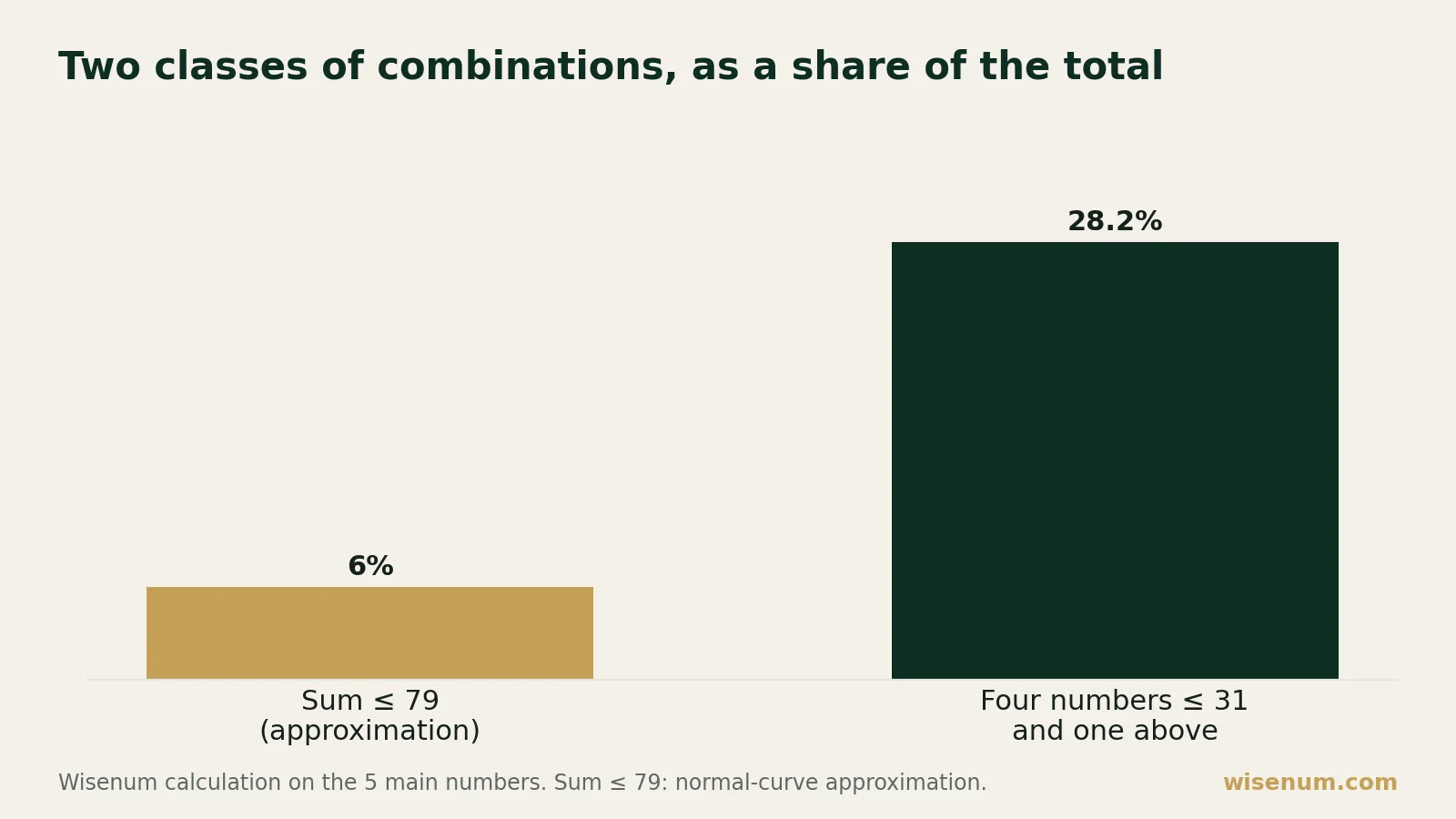
Wisenum estimates the popularity of combinations: how many players may have picked a similar line, and therefore the risk of sharing a prize. A well-known pattern is birthdays, which concentrate choices on the numbers 1 to 31 (number patterns players favor).
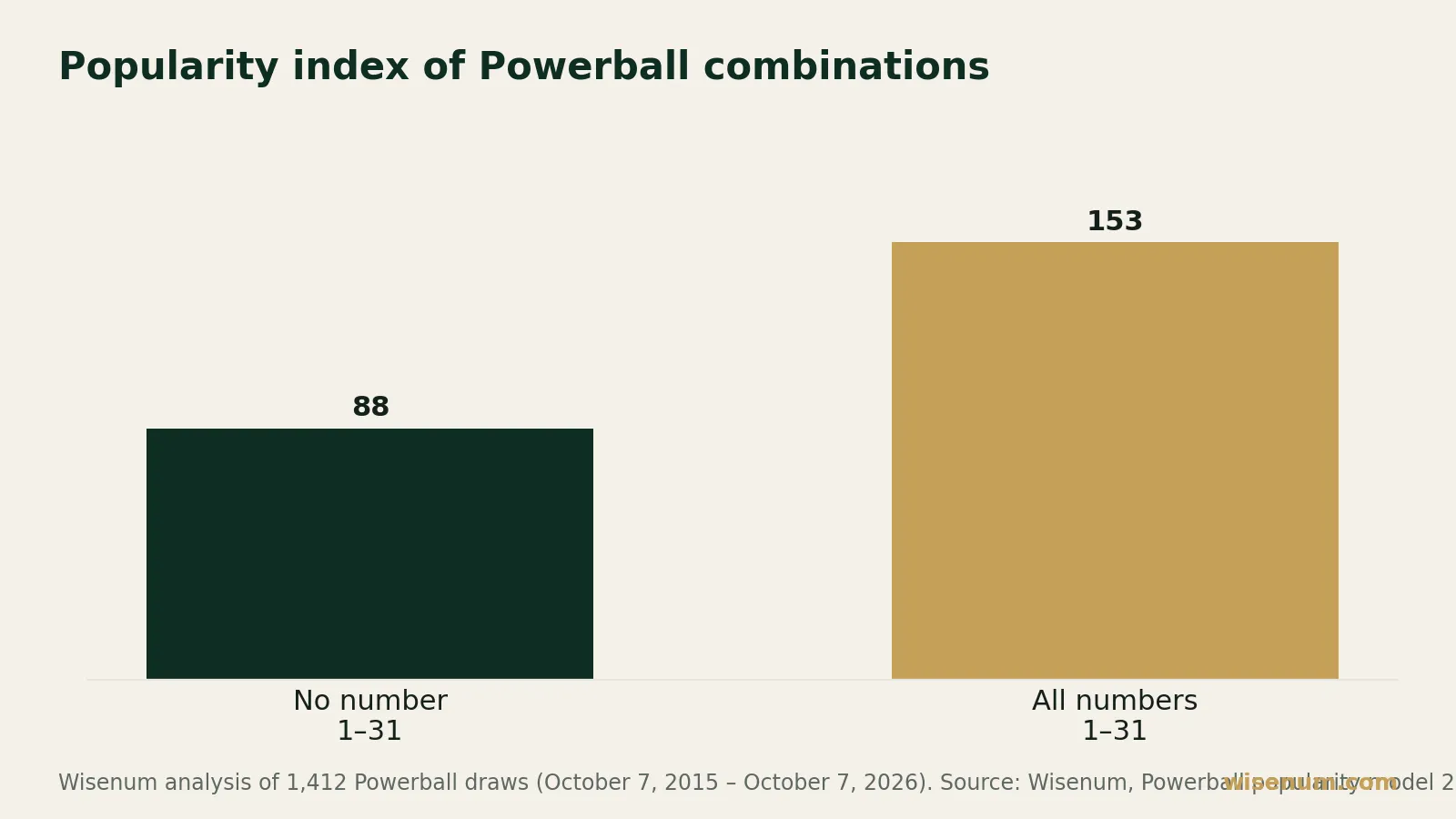
For Powerball, Wisenum's popularity analysis covers 1,412 draws, from October 7, 2015 to October 7, 2026. It gives:
- a popularity index of 88 for combinations with no number from 1 to 31;
- a popularity index of 153 for those made only of numbers from 1 to 31;
- a ratio of 1.73 between these two extremes (95% interval: 1.64 to 1.83).
In other words, a line made only of numbers from 1 to 31 is estimated to be played about 1.73 times as often as a line with none of them. The probability of being drawn stays the same. These are estimates: they cover the five main numbers, and the effects of the Powerball number are not validated. Source: Wisenum Powerball popularity model, 2026, Methodology page.
This data is aggregated. It says nothing about any individual player, and it does not reuse the results of the California study: it describes the same sharing mechanism, observed on a different game.
What to do with this information?
Nothing requires you to change your numbers. Everyone is free to play the numbers they like, and the probability does not depend on that choice. What the study shows is that the choice affects your share of the prize if you win.
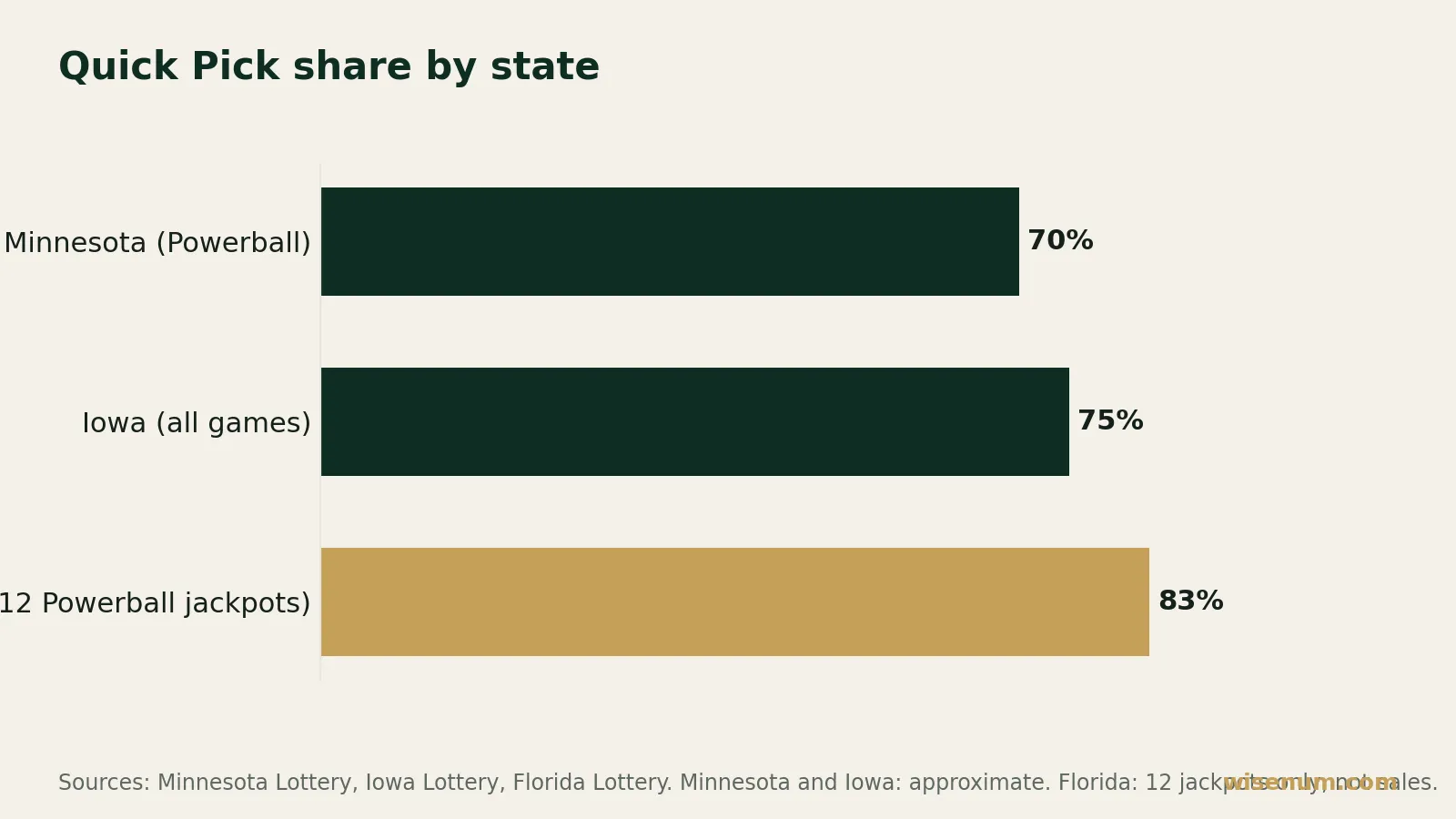
If you wish, you can keep your favorite numbers and complete them with others, to get a line that fewer people play. A random selection, for its part, does not depend on any personal preference: the study notes that lower-income players use it less often. In every case, you are acting on how a possible prize is shared, not on whether you win.
The takeaway
In a pari-mutuel game, a heavily played combination pays less when it comes up, because the prize is split among more winners. Every combination has the same probability of being drawn: popularity affects how the prize is shared, never the probability of being drawn. Parker, Albuquerque and Bart see it as one of the causes of the extra losses of lower-income players, about 7% per ticket in their California simulations.
Playing the next draw? See whether your line looks like the most common picks: Analyze a line
Play for fun, and only spend what you can afford to lose. Responsible gambling support: in the US, call 1-800-GAMBLER (ncpgambling.org); in the UK, visit BeGambleAware.
Frequently asked questions
Why do popular combinations pay less when they win?
In a pari-mutuel lottery, the prize is divided among all the winners. If many players picked the same combination and it comes up, the prize is shared among more people. For example, a $1,000,000 prize for a single winner becomes $250,000 each if four people played it. The combination is not drawn more or less often: only the number of winners reduces each person's share.
Does the popularity of a combination change its probability of being drawn?
No. The study explains that popularity affects the expected payout when you win, never the probability of being drawn. Every combination, popular or not, has exactly the same probability. For Powerball, that probability is 1 in 292.2 million for each line, whatever numbers you choose.
What is the link between the Parker study and Wisenum's data?
The study uses California data to show how popularity lowers payouts. Wisenum estimates the popularity of combinations in other lotteries, such as Powerball: a line made only of numbers from 1 to 31 (like birthdays) is estimated to be played about 1.73 times as often as a line with none of those numbers. It is the same sharing mechanism, measured on a different game.
What can players do with this information?
Nothing requires you to change your numbers. If you wish, you can keep your favorite numbers and complete them with others to get a line that fewer people play. The study also notes that lower-income players use random selection less often. In every case, you are acting on how a possible prize is shared, not on whether you win.
Every valid combination has the same probability of being drawn. Wisenum does not predict winning numbers.